

Guardianship & Custody Laws
Families sometimes use “custody” and “guardianship” to describe different concerns about care and decision-making. Start by identifying who needs assistance, who currently provides care, and what authority is already documented.
A disagreement between parents about a child’s schedule raises different questions from a relative seeking authority to care for a child, or someone seeking help for an adult. This guide explains the distinctions to discuss with an attorney.
Where Should the Discussion Start?
A starting point for discussion, not a determination of eligibility.
| Situation | Question to discuss |
|---|---|
| Parents disagree about a child’s schedule or major decisions | What custody or parenting terms exist, and what needs to be addressed? |
| A relative or other adult is caring for a child | What legal authority is already in place, and do you need another arrangement? |
| An adult needs assistance with decisions or personal care | What adult-protection or decision-making options should be evaluated? |
Not sure whether your situation involves custody, guardianship, or both?
Anthon Law helps Idaho families understand the difference between custody and guardianship and choose the right legal path.
Whether you need a Boise guardianship attorney, a child custody lawyer in Boise, or a Boise family law attorney, we can help you understand your options.
Legal Guardianship Defined
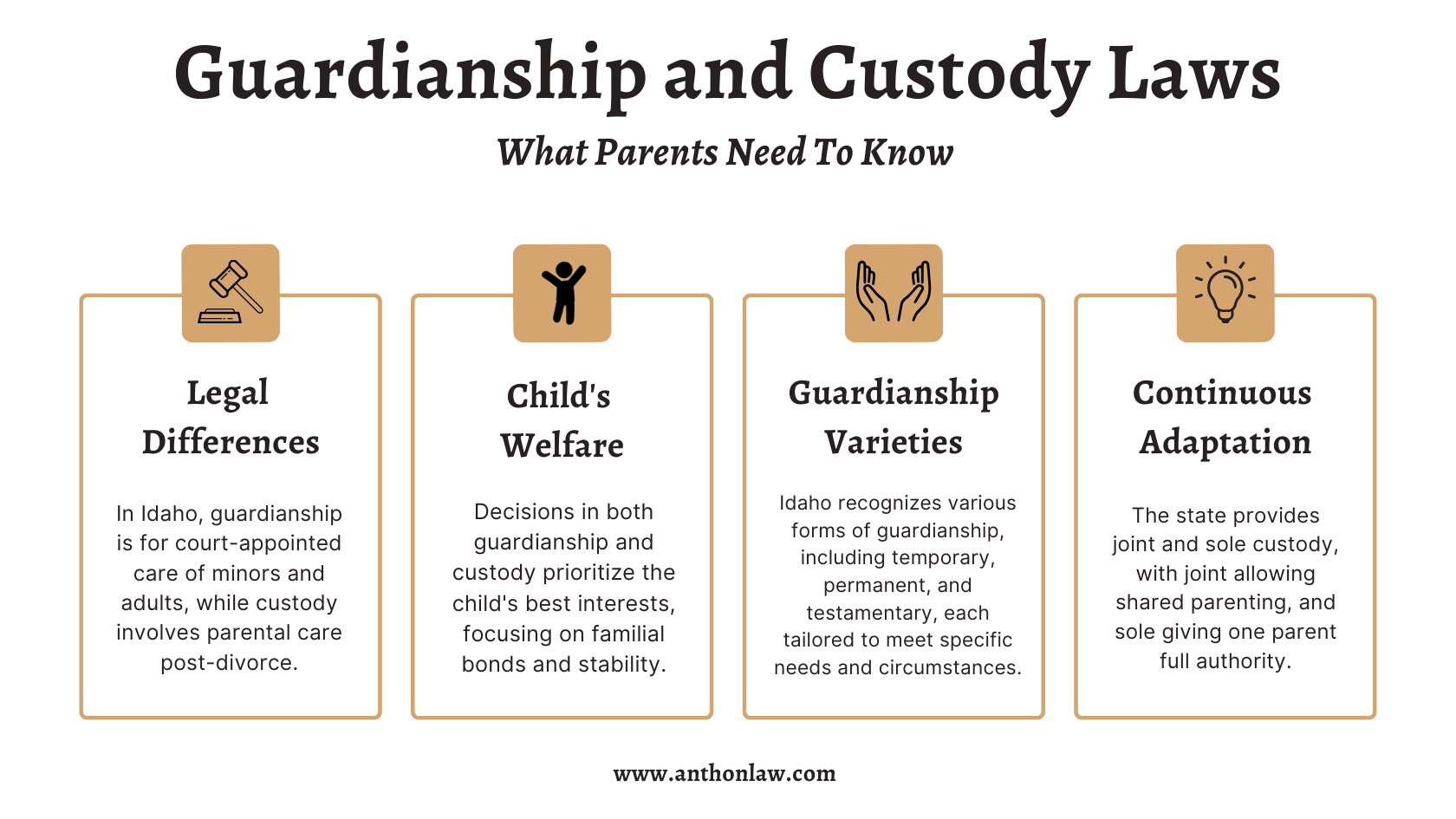
Legal guardianship in Idaho involves a court-appointed relationship that may address the personal care of a minor child or an incapacitated adult. The authority granted depends on the case type and the court order. Financial authority may involve separate legal questions and should not be assumed in every guardianship.
Guardianship for a Minor Child
This legal mechanism is typically used when parents cannot fulfill their duties due to incapacity, absence, instability, or other family circumstances.
A guardian’s responsibilities may include making daily care decisions, arranging healthcare, handling school-related matters, or addressing other needs the court authorizes.
Guardianship for an Adult
When assistance is being considered for an adult, the questions differ from child custody. Review the adult’s circumstances, existing documents, and the authority requested to determine which personal-care or decision-making options may apply.
Custody Laws in Idaho
In Idaho, child custody usually comes up during divorce, separation, paternity, or parenting-plan disputes. Custody focuses on parental rights, decision-making, and where the child will live.
Legal Custody
Legal custody focuses on a parent’s right to make major decisions about the child’s health, education, religion, and overall welfare.
Physical Custody
Physical custody focuses on where the child lives and how parents divide parenting time.
What Idaho Courts Consider in Custody Cases
Idaho courts focus on the child’s best interests when evaluating custody. The court may consider:
- The wishes of the child and the parents regarding custody and living arrangements
- The quality of the child’s relationship with each parent and any siblings
- The need for a stable and consistent home environment
- Each parent’s ability to meet the child’s needs
- The child’s school, community, and daily routine
Joint Custody vs. Sole Custody
Joint Custody
Both parents share decision-making responsibilities, parenting time, or both, depending on the custody order.
Sole Custody
One parent is granted primary decision-making authority, physical custody, or both, while the other parent may receive visitation or parenting time.
Filing for Guardianship or Custody
Filing for guardianship or custody in Idaho involves several legal steps. Depending on the case, this may include court forms, petitions, notices, affidavits, hearings, and supporting documentation.
For more information about the guardianship process, review how to establish legal guardianship in Idaho.
Custody filings often arise in broader divorce or separation proceedings. These cases may require detailed parenting plans and temporary orders addressing custody, parenting time, and support while the case is pending.
Appointing a Guardian for Minor Children
When a parent cannot care for their child, the court may appoint a guardian to assume certain responsibilities. Although parents are natural guardians by default, circumstances such as illness, incapacity, absence, instability, or safety concerns may require appointing someone else.
In these cases, the court ensures the appointed guardian serves the child’s best interests and can provide appropriate care, stability, and support.

Permanent vs. Temporary Guardianship
Guardianship can differ greatly depending on the needs of the child or adult involved. Some guardianships are designed for short-term needs, while others provide long-term stability.
Temporary Guardianship
Designed for short-term situations, temporary guardianship can help protect immediate needs until a more permanent solution is available.
Permanent Guardianship
Intended for long-term stability, permanent guardianship may remain in place until the ward reaches adulthood or another major legal event occurs.
Choosing the Right Path
Deciding whether guardianship or custody is the right legal arrangement requires careful consideration of the family’s circumstances, the child’s needs, and the rights and responsibilities involved.
At Anthon Law, we guide families through the complexities of guardianship and custody proceedings in Idaho. Our goal is to help each family make informed, thoughtful decisions that prioritize their loved ones’ well-being and future.
If you are facing decisions about custody, guardianship, or related family law concerns, Anthon Law can provide clear guidance and practical support.
Guardianship & Custody FAQ
Common questions about child custody, minor guardianship, adult guardianship, and choosing the appropriate legal path.
Talk Through Your Custody or Guardianship Options
If your family is trying to decide whether custody, guardianship, or another legal option makes sense, Anthon Law can help you understand the path forward.